The Rio Grande cutthroat trout wears its name on its throat — the slash of red beneath the gills that marks every cutthroat — and it carries another distinction: it is the southernmost cutthroat subspecies on earth, native only to the headwater streams of the Rio Grande, Canadian, and Pecos basins of New Mexico and southern Colorado. It is also New Mexico's state fish. And for most of the twentieth century, it was losing its home.
The invaders came in the creels of well-meaning anglers and the buckets of early stocking programs: rainbow, brown, and brook trout, stocked across the state for a century. The non-natives outcompeted the cutthroats for food and habitat, and worse, the rainbows interbred with them, diluting the native genome into hybrid "cutbows." Stream by stream, the pure Rio Grande cutthroat retreated into isolated headwaters.
The comeback began in 2002, when New Mexico launched one of the largest native-fish restoration projects in American history: the Rio Costilla Project. In the Rio Costilla watershed of northern New Mexico, teams from the New Mexico Department of Game and Fish, the U.S. Forest Service, Trout Unlimited, Colorado Parks and Wildlife, and Turner Enterprises set out to give the cutthroat back its rivers. The work was methodical and unglamorous — electrofishing surveys, genetic testing, concrete barriers to keep non-natives from swimming upstream, the careful removal of non-native fish, and then reintroduction of pure-strain cutthroats from hatchery brood stock and wild populations.
More than three decades of work later, the results are extraordinary: the project has restored Rio Grande cutthroat trout to approximately 120 miles of connected streams, plus lakes and a 300-acre reservoir, in the Rio Costilla watershed — increasing the fish's current distribution by twelve percent and reclaiming part of its historic range. The connected system matters: linked spawning streams and main channels let the fish move, exchange genes, and survive drought and wildfire without constant human intervention.
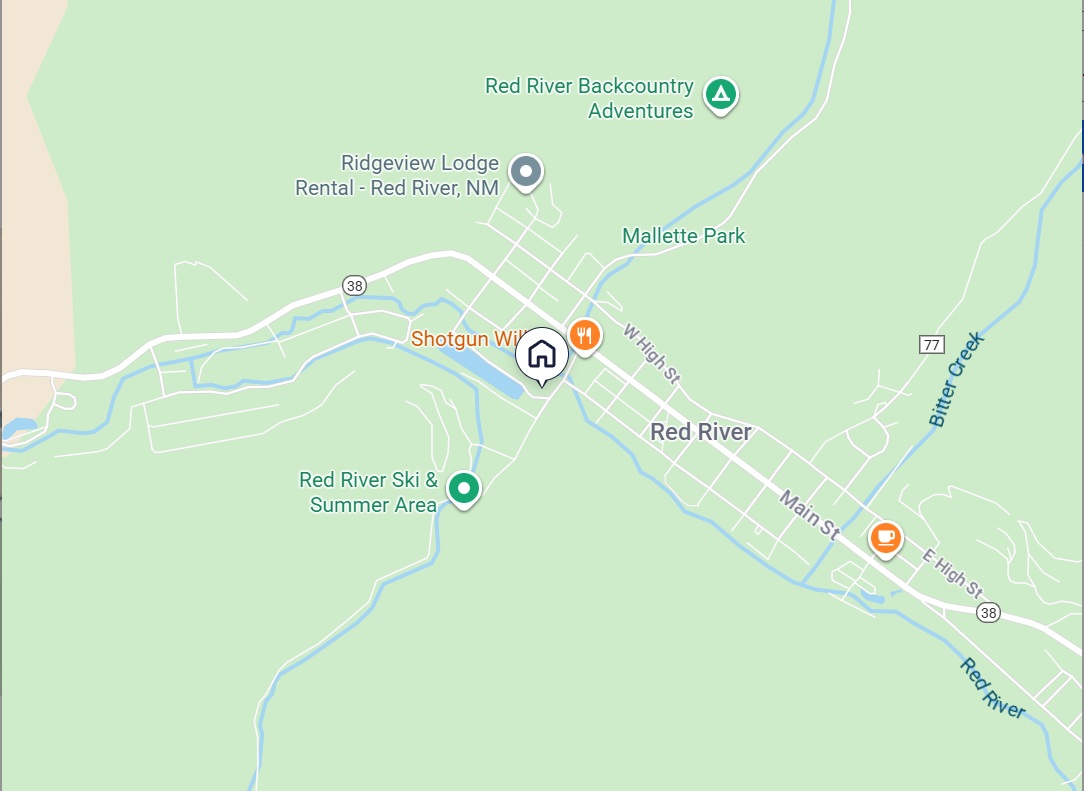
Closer to Red River, the restoration reached into the Valle Vidal Unit of the Carson National Forest, where more than 5,000 native cutthroats were stocked into Comanche Creek and its tributaries — about twenty miles of small streams, now managed as catch-and-release water with artificial flies and lures only. It is some of the finest native-trout fishing in the state, and every red slash in those clear creeks is a small victory: a state fish, back where it belongs.
Planning a Red River getaway? Book your stay at the Claim Jumper A-Frame 6