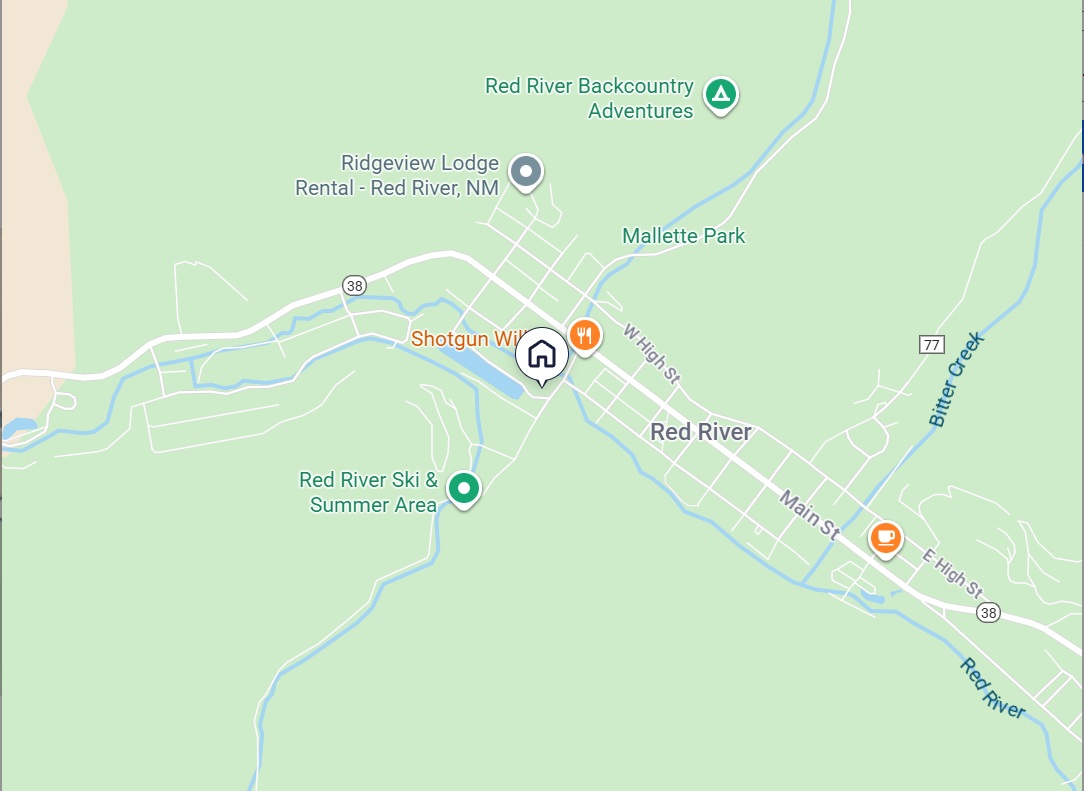
Eight miles northeast of Red River, up a mountain road that climbs into the hills, lies the ghost town of La Belle. Not much is left but the memory of a boomtown and, if the legends are true, outlaw gold buried somewhere in the hills around it.
La Belle sprang up in the summer of 1894. The mining camp was named on August 28 for Belle Dixon, the wife of a prospector who was one of its first investors. The rush was furious. By December the town counted 80 buildings, and by March 1895 some 700 people lived there. A schoolhouse went up, the La Belle Cresset went to press, and the Nadock Hotel doubled as an official stagecoach stop. A post office opened in 1895.
Among the regular visitors to the young town were Tom Ketchum and his brother Sam. The brothers kept a ranch nearby and rode into La Belle for the dances at the Nadock Hotel, where their frequent dancing partner was Annie Nadock, the proprietors' daughter. It was a strange double life: the same men who two-stepped with the innkeeper's daughter were also holding up the Colorado and Southern Railroad at Twin Mountain, down by Folsom.
Tom Ketchum, born October 31, 1863, in San Saba County, Texas, was known across the territory as Black Jack. His gang robbed the Colorado and Southern train at Twin Mountain in September 1897 and again in July 1899. The second robbery was carried out without Black Jack and ended in a gun battle in Turkey Creek Canyon near Cimarron. Sam was wounded, captured days later, and died of his wounds in the Santa Fe Territorial Prison.
Tom could not leave the railroad alone. On August 16, 1899, unaware that Sam was already dead, he tried to rob the same train single-handed at the same spot. The conductor, Frank Harrington, recognized him, leveled a shotgun, and blasted him out of the saddle. Found beside the tracks the next day, Ketchum was taken to Trinidad, Colorado, where surgeons amputated his right arm.
Tried at Clayton, he was convicted of attempted train robbery under a territorial statute that made "felonious assault upon a railway train" a capital crime, a law later ruled unconstitutional. He was the only person ever hanged in Union County in the New Mexico Territory. On April 26, 1901, Tom Ketchum climbed the scaffold at Clayton. Nobody in town had any experience with hangings. The rope was too long, and after the weight he had gained in jail, compounded by his missing arm, the drop severed his head from his body. His last words, reported by the San Francisco Chronicle: "Good-bye. Please dig my grave very deep. All right; hurry up." A livelier version, "I'll be in hell before you start breakfast, boys! Let her rip!", survives only as legend.
That is where the legend that ties Black Jack to Red River country begins. The old stories say Ketchum buried several thousand dollars of his loot somewhere near La Belle, and that nobody has ever found it. The gold of La Belle proved as elusive in the ground as above it: the ore was low-grade, the post office closed in 1901, and by 1910 only 10 souls remained.
Ketchum's name lingered in Red River long after the hanging. When the Black Mountain Playhouse opened in the late 1930s, old-timers swore its bar had come from Cimarron with bullet holes put there by Billy the Kid and Black Jack Ketchum. So the next time you stroll Main Street in Red River, remember: the outlaws really did dance here once.
Planning a Red River getaway? Book your stay at the Claim Jumper A-Frame 6