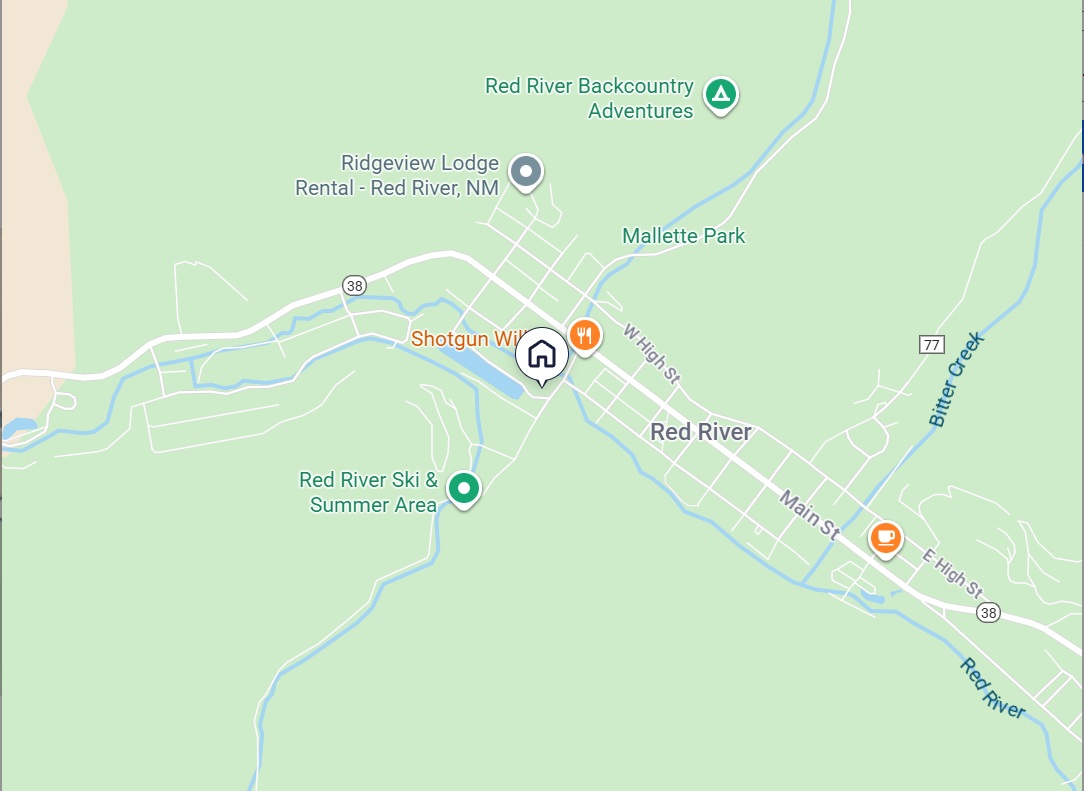
Ask most people about the Red River gold rush and they'll name Elizabethtown, the great Baldy Mountain camp that drew thousands in 1866. But the gold didn't stop at E-Town. In the narrow, heavily forested valleys around Red River itself — along Bitter Creek, Placer Creek, Gold Hill, and the little camps of Anchor and La Belle — a quieter generation of miners worked smaller placers for decades, and their story survived in government surveys and, remarkably, in the ground itself.
The U.S. Geological Survey catalogued the Red River district in Bulletin 1348: near Anchor, six miles northeast of Red River, placers were worked in Bitter Creek and a side canyon in 1898 and again in the 1940s; small placers were worked intermittently along Placer Creek south of town and in Gold and Spring Creeks near La Belle, tributaries of Comanche Creek. Recorded production was small — less than 500 ounces of placer gold in total, a whisper beside Elizabethtown's roar — but the workings drew prospectors for half a century.
The most storied of the small mines was the Big Five, on Bitter Creek. Thought to have yielded a rich bounty of gold as early as 1858, it was prospected in 1890 with poor results. Then, in 1921, it became a working gold mine — a waterwheel-powered operation run above 10,000 feet, where miners lived and worked in conditions as crude as the technology was ingenious. When the mine finally fell silent, it left behind cabins, machinery, and the domestic debris of the men who worked it.
That debris became a book. Historical archaeologist Michael S. Burney excavated the Big Five site along Bitter Creek, resurrecting the miners, their technology, and their crude living conditions through written records and archaeological excavation — tins, tools, and timber brought back into the light after decades under the forest floor. It is one of the rare cases where a small western mine gets the full scholarly treatment, and the treatment it deserved: the Big Five may never have made anyone rich, but it kept a community of miners alive and working for years.
Red River's forgotten placers never built a boomtown. They built something else — a working landscape of sluices, cabins, and waterwheels in the high valleys, where men chased color in cold creeks long after the great rushes moved on. The gold is mostly gone. The story, thanks to the archaeologists, is not.
Planning a Red River getaway? Book your stay at the Claim Jumper A-Frame 6