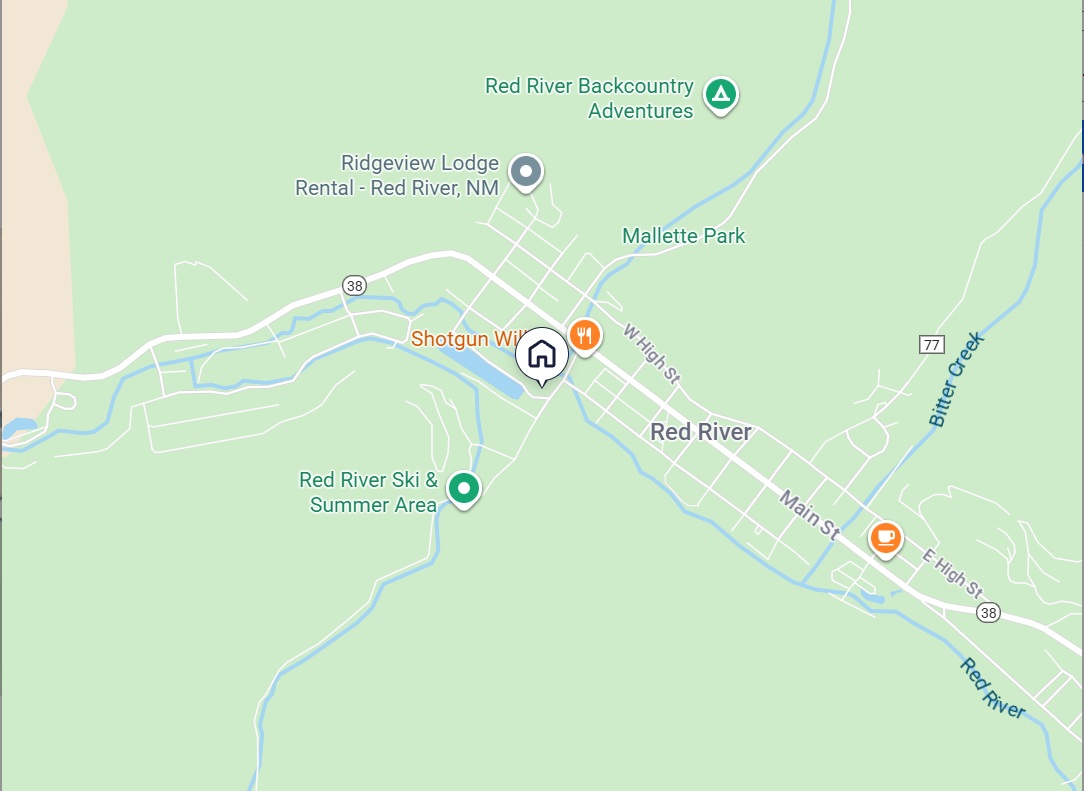
Every gold rush runs on two things: gold, and water to wash it free. Around Baldy Mountain in 1867, northern New Mexico had plenty of the first and nowhere near enough of the second. Prospectors who had flocked to the Moreno Valley after the October 1866 gold find on Willow Creek could work their placer claims only while snowmelt and spring rain kept the creeks running. By late spring most gulches dried up, and rich gravel sat idle while miners waited on the weather.
The man with a plan was Captain Nicholas S. Davis, an engineer who had come to New Mexico with the California Column during the Civil War. Davis remembered the great ditches of the California goldfields, built to carry distant water to dry diggings, and he proposed the same cure here: tap the Red River, on the far side of the mountains, and carry its water all the way to the thirsty claims around Elizabethtown.
Lucien B. Maxwell, owner of the vast Maxwell Land Grant, signed on, along with Elizabethtown merchants John Dold and Morris Bloomfield, Fort Union promoters William Moore and William Kroenig, and stage-line operator Valentine Shelby. Together they formed the Moreno Water and Mining Company, a corporation organized to do something new in New Mexico: sell water to miners as a commodity. A Santa Fe newspaper hailed the project as the greatest piece of public improvement within the borders of New Mexico.
Construction began in May 1868, and it was a staggering undertaking. Hundreds of men went to work that summer, newspaper reports said as many as 600, digging channel and raising wooden flumes on trestles around peaks and across ravines. At one point a half-mile aqueduct spanned a sheer canyon 79 feet deep. The finished line wound nearly 42 miles through the mountains, although the Red River lay only about 11 miles west of Elizabethtown in a straight line. Crews completed eight miles in little more than a month, then winter stopped the work with nine miles still to go, and building resumed the following March.
On July 9, 1869, the first water finally trickled into Humbug Gulch, and the celebration curdled fast. Less than a quarter of the water the miners needed arrived at the end of the line; the rest had leaked, seeped, and evaporated along those 42 miles. The ditch was the territory's first trans-basin diversion, a genuine feat of nineteenth-century engineering, and it was, in the plain words of its historians, a remarkable failure.
Yet the Big Ditch refused to die. It operated, inefficiently, for more than thirty years, until about 1900, because the miners of the Moreno Valley had nothing better. The gold rush it was built to save faded anyway, undone by the same scarcity the ditch could not conquer. Today its rotted flumes are long gone from the high country between the Red River and Elizabethtown, but every traveler who drives the Enchanted Circle crosses the ground where an army of ditch diggers once tried to move a river, and very nearly did.
Planning a Red River getaway? Book your stay at the Claim Jumper A-Frame 6